The Saree: An Inheritance
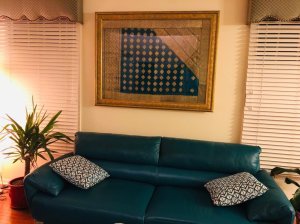 My sister’s handiwork on her MIL’s Benarasi” data-medium-file=”https://cafedissensus.com/wp-content/uploads/2023/07/image008.jpg?w=300″ data-large-file=”https://cafedissensus.com/wp-content/uploads/2023/07/image008.jpg?w=620″/>
By Sreemati Sen
“Kona lay on the bed…her long curly tresses spread around her head like a halo. The sequins on her purple georgette sari glistened as the sobs wracked through her body” – this is how a chapter reads in my grandmother’s personal diary. Nihar Kona, better known as ‘Kona’, was my maternal grandmother’s elder sister. The scene is from the days of the colonial rule when my great grandfather was bestowed with the prestigious title of Rai Bahadur. Nihar, his first-born, got married at the age of sixteen, only to become a widow at eighteen. A rare beauty in those times, she was well-known for her style and elegance. The Rai Bahadur’s palatial house always had guests flitting in and out. The Memsahibs often dropped in to pay a visit. Rai Bahadur’s wife and daughters had the freedom to mingle with them. The influence of this intermingling was seen not just in their mannerisms and language but also in the way they styled their outfits. Besides Bengal Cotton, my grandmother and her sisters wore Crepes, Chiffons, Satins and Georgettes. Matching blouses with frills, lacework, crochet were made by the best tailors. Fabrics would often be sourced from abroad. Advance orders would be placed with the master weavers to make customized luxurious drapes. Every time the Memsahibs came home, they carried with them exquisite gifts for the girls. Though Kona was a widow, none of her liberties were truncated. Unlike the widows of those times, she had freedom to wear every colour and every fabric.
The middle sister, a few years older than my grandmother, got married to one of the richest Zamindars of Birbhum, West Bengal. Her photographs speak distinctly of the long-lost era of the big Zamindars, also known as the Rajas. Traditionally dressed in broad-bordered silks and zari, her head was always loosely covered with the pallu of her sari. Bedecked in heavy jewelry, she sat pretty and demure refusing to meet the camera. The stark differences between the Rai Bahadur’s family and that of the Zamindar’s are clear.
My grandmother, the youngest of the three, got married to the son of a popular Public Prosecutor. Their union heralded a drastic change in her environment. From the liberal, Anglicized setting in the Rai Bahadur’s home, she moved to the confines of a joint family. As the daughter-in-law of a prestigious family, she shifted to stiffly starched Bengal Cottons. She wore them in the typical Bengali way, better known as the ‘Aatpourey’ style. From crepes and georgettes, my grandmother went back to Tant and Gorods. The English colors gave way to broad, contrast borders set against a light base, creating a typical ‘bouma’ (daughter-in-law) look. In place of the sleek jewelry (inspired by the Memsahibs), heavy, traditional jewelry by the family jeweler adorned her. Being the only daughter-in-law in a joint family comprising seventy-five members, she had to cover her head in the presence of the elders. My grandmother had never known purdah but the new set up demanded a standard code in the presence of family elders, guests and strangers. The free-flowing pallu which was never pinned was now secured with a safety pin. In order to keep it from slipping, a bulky, silver keychain hung from it. The key chain was passed down to my mother during her wedding. Today, it’s with me. Interestingly the key chain which kept my grandmother’s pallu in place, now holds my pleats together as a brooch.
The many purposes of a sari…
Though the set-up was traditional and rigid to an extent, my grandmother tried her best to pass on her liberal thoughts to my mother and her sisters. She got dresses stitched form her crepes and georgettes saris that she no longer wore. It was only on rare occasions that she wore them on her visit home. It’s from her that we have learnt to make better uses of our saris. Cushion covers, covers for our blankets, table runners, curtains – all that you see in my home are made from the saris I no longer wear.
Reinventing the wedding Benarasi…
Interestingly, in those day, our families did not fret much about the colour red during wedding. No wonder, my grandmother had in her wedding trousseau, Benarasis of every possible color. From pista green, to purple, from light blue to peach, she had them all. Most of them are what we describe as ‘English’ colors. All these saris were later inherited by my mother and her sisters.
My mothers’ wedding sari was a gorgeous red with stripes of real zari all over. But with time, it gave way. Mother’s creative mind decided to reinvent the sari. She cut the portions of the sari which were still intact and appliqued them on three tussars. The result was three saris, identical but distinct. Well, it has always been the tradition in our family to divide the saris equally amongst the siblings. While Didi’s sari has the stripes shaped into flowers, mine has thin strips of the zari and the red all over. My younger sister’s sari was a black base with red zari stripes all over. My elder sister experimented with her mother-in-law’s Benarasi. She created a huge wall piece out of the luxuriant and intricate drape. Neatly cut and appliqued, it adorns her living room in her house and never fails to keep the guests enthralled with its beauty.
Recreating memories…
It’s a norm to wear our mother’s sari for one of the wedding rituals as they are considered a good omen. On the day of ‘paka dekha’ (the final meeting of the families for fixing a date of marriage), I chose the sari Ma had worn for her Ashirbaad (blessings ceremony). A gorgeous Kashmiri Silk in teal and red, with a handwoven and intricate design, it was a gift from my mother’s paternal grandparents. As I stood that day, waiting for the families to select a date, I felt a rush of emotions. I could visualize my young, beautiful mother, sitting on the ground waiting for the elders to bestow their blessings on her. I felt grateful that the sari carried with it the blessings of my ancestors.
Weaving memories….
Every fabric has a memory attached to it.
A Resham border Tant – my father’s first gift to my mother after their marriage. A Chanderi on their silver anniversary. Or the sari which reminds us of the angry exchange between the vendor and Baba in his broken, Bengali accented Hindi on learning that it was a fake and that he had been duped. Saris remind us of a specific incident. They also remind us of someone special. I have with me the Mul cotton that my grandmother wore for the last time. It lies in my wardrobe and smells faintly of her talc. Every year, I take it out on her anniversary and smell it to see how well I remember her. Well, the memories are still clear. Dadima in her softest, unstarched Mulmul, waving off the fumes of the Dhup (Agarbattis) as she walks from one room to another. Her freshly washed hair lies in thin tendrils. The fragrance of the sandal Agarbattis and the scent of the Ponds Dreamflower talc follows her around!
A yellow Kashmiri, hand-embroidered silk reminds me of my parents’ difficult times. We are three sisters and it’s customary to put together an enviable trousseau. Baba worked in the senior level management at the Steel Plant. They saved every penny for our marriage and painstakingly put together a wonderful collection of saris from various states. None of us can complain that hers is the best or that our parents have been patrial to one of us. Our wedding trousseau will always be a reminder of our parents’ struggles.
Passing on the legacy…
My first-born is a male child. The moment the doctor declared the gender, my parents-in-law broke into huge shouts. They exclaimed, “bongsho rokkha holo” (Our legacy stands saved). But the newly-minted mother on the OT table looked at her son and muttered, “What will happen to the legacy of my saris? My grandmother has her daughters. My mother has her daughters, but what about me?” The Almighty heard my prayers and decided to give me another chance. My joy knew no bounds when after six years, the doctor announced, “Bitya hui hai” (You have a daughter). Since then, I have been on a conscious purchase drive. One for my daughter and one for my future daughter-in-law. When my good friend, Dr. Kavita K, a well-known figure in the world of saris and handloom, was diagnosed with lung cancer with low chances of survival, she rued, “What will happen to my saris?” Before she passed away, she wrote to me saying, “Would you mind if I send one of my precious saris to you? That would always make you remember me.” I have two of her choicest saris with me. Not a day goes that I don’t think of her.
On one of our company workshops, I met a young girl from Dhaka, Bangladesh. We met thrice, lost touch and then reconnected. She lost her father, had an extremely difficult pregnancy, followed by months of hospitalization for her newborn. And then she lost her mother, the most important person in her life. All I did, was to remain connected to her. How can I let go of her hand during tough times! In December, we met. She handed me a packet and said, “I could think of no one wearing this, but you!” It was a silk sari that belonged to her mother. The sari was a special purchase made by her father during his visit to Japan. Giving away your precious treasure to a friend speaks volumes about her love and respect for me.
A Sari – A Phase…
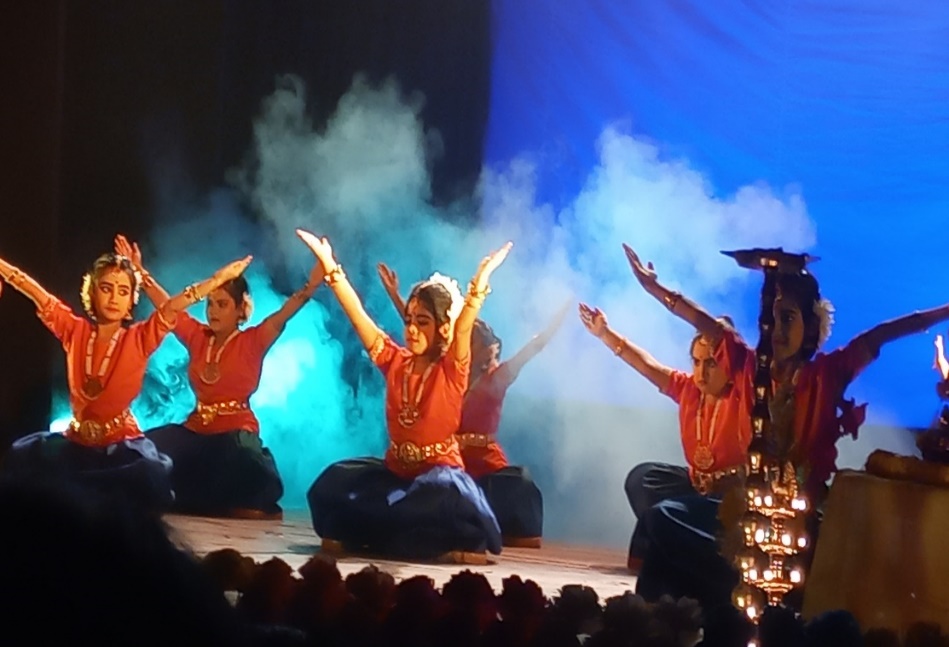
I am at stage where my daughter, a Bharatanatyam dancer, stakes claim to almost all my saris. Opening up my wardrobe has been the biggest milestone in my life. It brings back memories of all the stages that I have gone through. I wore my mother’s Benarasi for the first time during my farewell in school. She decided that it was time to trust me with her silks. That gave me a special power of entitlement. For I had finally grown up and yes, I was sharing my mother’s choices. I see the same with my daughter. The pride and satisfaction are evident every time she steps out in my saris. These symbolic rites of passage are precious to both the mother and the daughter. From a mother-daughter to a close friend or rather comrades, our bond has transcended to another level, just the way it did thirty years ago. Every sari denotes a phase in our life. A chapter that ends to begin another. From the glimmering sequin-worked georgettes to the comfortable taant or the luxurious crepes to the Mul cotton, I feel I have grown and matured in a sari. From draping a sari during Saraswati Pujo to wearing one as a mandatory wear during my rural fieldwork days, from learning to cycle in a sari for miles to climbing atop a bus in a sari, I have seen enough adventure. From my first sari as a dancer to the sari I managed to drape during my baby shower. The drape has seen me develop from a gawky teenager to a woman who has her own style.
The Sari – A Confluence!
The sari is symbolic. It’s not just a piece of fabric. But the meeting point of my past and my present. While my past has shaped, and modelled me into what I am today, it keeps resurfacing every time I drape a sari. The present carries with it the whiff of my past. A past built on the legacy left by the Rai Bahadur’s daughters.
In Samira’s Mamoni’s saree
My sister’s handiwork on her MIL’s Benarasi
In Dr Kavitha’s saree: A Bishnupuri Silk
The Rai Bahadur’s Daughter
Mom and me in Sidurkhela
Bio:
Sreemati Sen holds a Masters in Social Work from Shantiniketan. A Development Professional, she has specialized in Psychiatric Care of differently-abled children. Her stories have been featured in various anthologies. She made it to the Top Fifty Indian Horror Writers Contest organized by Half-Baked Beans. She has been the second runner-up for the Asian Literary Society’s Wordsmith Award, 2020, 2021 and 2022 for the Short Stories segment. She has also won the Orange Flower Award, organized by Women’s Web for her blogs on Parenting and Wellness in the year 2021, 2022 and 2023. She is also one of the top twenty-five bloggers on Momspresso.
***
For more stories, read Café Dissensus Everyday, the blog of Café Dissensus Magazine.


 Café Dissensus
