Doing It Her Way: A Niece Remembers Her Stylish Aunt
By Shymasree Basu
My chotopishi was born well before India attained independence. Youngest amongst the girls she was nicknamed ‘Baby’. I cannot say whether she was coddled by her older siblings. Most probably not as my earliest memories of my chotopishi were that of a woman with a stentorian voice which was at odds with her petite frame and a fiery personality which made the kids in the household stay out of her way. We were in awe of her and were too scared to negotiate an informal bonding with her. But as the years rolled by and I came of age I understood her need to stay true to her perhaps bohemian self. She was a single woman who refused to be seen as a pathetic spinster and took every opportunity to assert her life choices with flamboyant spunk. In a world where there was no social media she curated her own style, an inimitable ‘saree swag’ which made her a dominant presence in an otherwise patriarchal household.
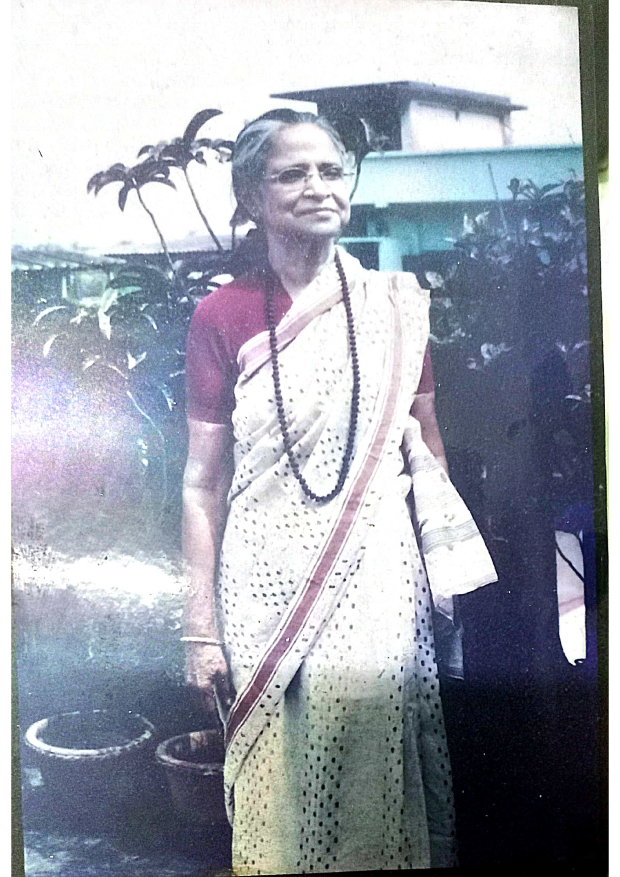
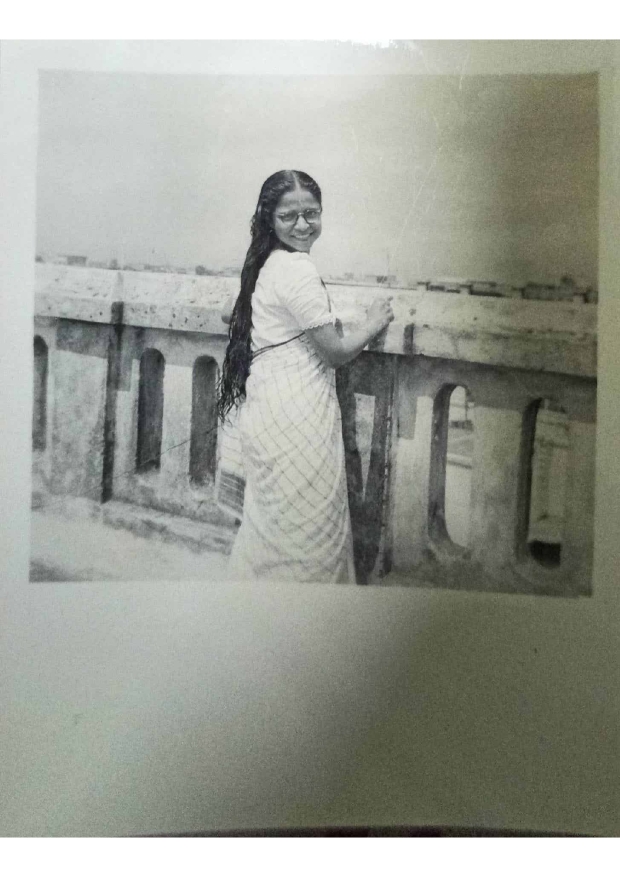
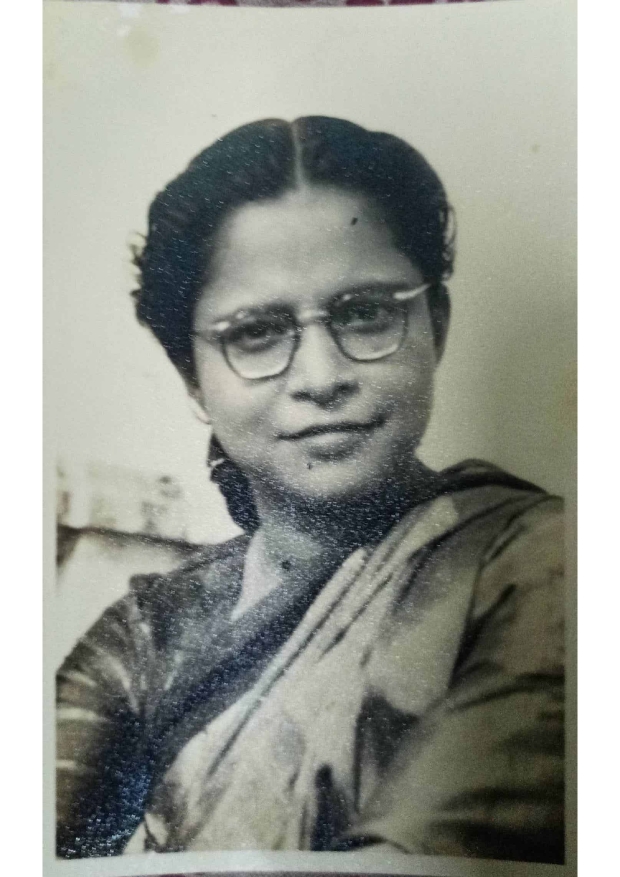
When I look back to reexamine chotopishi’s life, I see this woman who always reveled in her own authenticity. But I also see her sarees. Even in her earliest photographs she is at home in her sarees. Goofing around, with her titan tresses open she looked winsome as her uninhibited, candid self. As she matured, her saree choices became more eclectic. She had an eye for cotton weaves and never wore loud colours. The whites, beiges. greys and pinks dominated her wardrobe. She was also fond of kotas and hand stitched kantha and applique embroidery sarees which did great justice to her wiry frame. I never saw her wear synthetics or georgettes. Perhaps with her trademark imperiousness she dismissed them as upstart, ‘wannabe’ sarees, not fit for a connoisseur’s wardrobe. I don’t know whether her minimalist sarees were a conscious fashion choice; perhaps an ode to the turbulent times she grew up in where embracing one’s national identity was itself an act of courage. Or maybe she was scripting her own subjectivity through her wardrobe. Either way, the sarees she wore became a part of her identity. The neighbourhood knew her as this feisty, no-nonsense, single woman, schoolteacher who had a distinctive saree collection. She complemented her sarees with a single strand of rudraksha or pearl studs and it became a ‘statement’ – an effortless one, I might add. In her professional avatar her hair was pulled back in an austere bun which added a touch of spartan elegance to her presence and complemented her sarees. I may say that this was her curated look and remained inimitable.
Chotopishi was well ahead of her times as she invested deeply and continuously in her own happiness. She was fond of pampering herself with solo movie outings and regularly indulged in vacations and trips with her colleagues and friends. You may say she had a regular girl gang around her. The family albums bear proof of this as well. Her earliest forays into fashion are all recorded in black and white photographs. You can see an eager, young girl wearing a saree with a collared blouse and trying to look older. The later clicks show the more feminine side of her. There is just a hint of coyness, but she suppresses it and stares directly into the lens. Well, demure was not her style at all. Her understated saree style was not an extension of her personality but rather a counterpoint. She lived her life with aplomb and was fearless about defending her choices and did so with vociferous gusto. The sarees perhaps muted her feisty personality to make her a perfect fusion of ‘fire’ and ‘ice’. I guess young bachelors were unable to negotiate this charming contradiction in her persona for ‘self-possessed’ was a feminine trait which was not yet in vogue.
As a schoolteacher she used to spend a part of her salary in buying sarees and bags. The North Kolkata saree stores around Bidhan Sarani were her favourite haunt. I remember her regaling us with an anecdote when a salesman complimented her taste by reporting to her that the saree she had bought was the same one worn by Smita Patil in Mrinal Sen’s Akaler Sandhane. The saree in question was a white Tangail with orange and green floral work on the border and pallu. The little me was quite impressed without actually knowing who Mrinal Sen or Smita Patil were.
As I grew older, I unconsciously followed her sartorial style – always striving for the minimalist effect, but she was the OG of the minimal saree style. After retirement, she cut off her hair into a stylish bob and it really took her look up to the next level: a touch of class to enhance her simplicity. Although she inspired my fashion choices up to a great extent, I could only channel her spunky saree aesthetic partially. I would love to believe that I have preserved her style aesthetic if not entirely but substantially enough to be called her saree disciple if not an heir to her style.
Chotopishi passed away in 2014. The photograph on my table is one of her last ones. The occasion was my sister’s pre-wedding photo shoot. On a whim she asked the photographer to take a solo shot of her, joking that it would be the photograph which would be used to condole her memory after she had passed away. Ironically, it was the same terrace she had frequented as a young girl. There is a twinkle in her eyes as the hint of her wry smile lights up the frame. She is wearing a tussar weave with maroon and green parallel bootas – hazarbuti as they are called. I daresay she makes the saree look good.
Rest In Peace Chotopishi – “They Don’t Make Em Like You Anymore.”
Bio:
Dr. Shymasree Basu, Associate Professor in the Department of English, Vidyasagar Metropolitan College, Kolkata, completed her doctoral research from Jadavpur University in 2010. She has presented many papers, delivered lectures in several national seminars and has several publications to her credit.
***
For more stories, read Café Dissensus Everyday, the blog of Café Dissensus Magazine.


 Café Dissensus
